
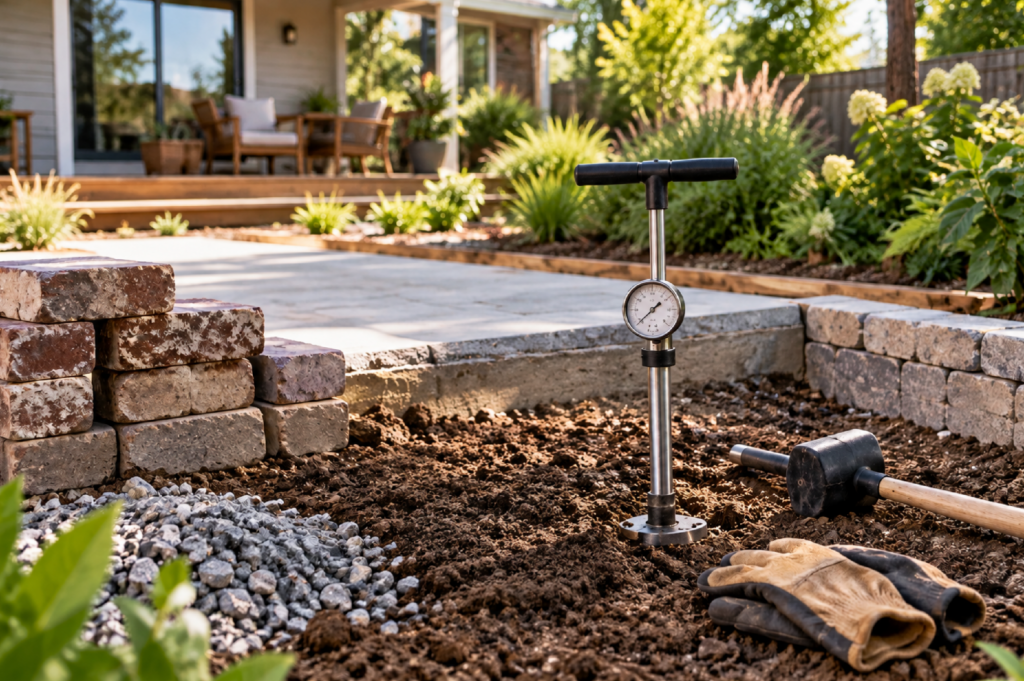
My neighbor redid her back patio last spring. Bamboo edging, reclaimed brick border, the whole eco-conscious package you’d expect from someone who reads the same blogs I do. By August there was a two-inch crack running diagonally across it, and by October she was pricing out a full redo. Nobody talks about that part of sustainable building. Everyone’s fixated on what a material is made of and almost nobody asks whether it’s going to hold up once it’s actually in the ground.
That patio bugs me, honestly, because the fix would have taken an afternoon and cost less than the eventual repair did.
The Soil Problem Nobody Checks
Contractors run a soil check before they build on anything. Homeowners mostly skip it, which I get, since it eats into a weekend that’s already booked with actual construction. But if you’re pouring a patio, patching a section of foundation, or putting a retaining wall around a garden bed, what’s under the surface ends up mattering more than whatever finish you chose on top of it. Drainage. How much the ground settles once it’s carrying weight. Whether the thing you just built stays where you put it after the first real storm.
Skip that step and you’re just hoping. Sometimes the ground cooperates and nothing happens. Other times, like with my neighbor’s patio, a crack shows up a season or two later, right around when you’ve stopped thinking about it, and now you’re demolishing concrete and gravel that already cost money and carbon to produce once.
Professional crews run this check as routine, with field equipment most homeowners have never touched. You don’t need a lab for it. Basic soil and compaction testing gear, the kind sold by suppliers like Certified MTP, is the sort of thing anyone can pick up and learn to use over a weekend, before pouring anything that’s supposed to stay put for decades.
Reclaimed material is great, until it isn’t
There’s a decent instinct going around toward reclaimed brick, recycled aggregate, salvaged concrete instead of buying new. Cuts demand, usually cuts cost too. My neighbor used reclaimed brick for her border, actually, and that part held up fine.
The catch is reclaimed material doesn’t behave consistently. One pallet of recycled aggregate can be noticeably different from the next pallet, even from the same supplier, same yard, same week. Strength varies from batch to batch. So does composition. So does how well it compacts once you’re actually working it. New material comes with a spec sheet you can trust. Reclaimed material is more of a guess dressed up as a decision.
If that reclaimed stuff is going anywhere structural, a retaining wall, a load-bearing patch, a walkway base carrying real weight, it’s worth taking ten minutes with proper testing equipment for concrete, aggregate, and soil before you mix and pour it. A bad batch caught early is a minor inconvenience. A bad batch caught after the wall is up is a weekend you didn’t plan on losing.
It’s not just the big jobs
People assume testing matters for commercial builds and not much else. But the failures I keep running into are all small residential ones. A patio that cracks after its first hard freeze. A garden wall that starts leaning after one bad rainstorm. A foundation patch that separates from the original slab within a year, right along the seam where the old and new concrete meet.
None of it’s catastrophic. It’s just slow and irritating, the kind of problem that quietly eats a weekend you’d earmarked for something else and adds more material, more trips to the dump, and more embodied carbon to a project that was only supposed to happen once.
Building to last is the actual sustainable choice
Picking a good material gets you halfway there. The other half is checking that it actually holds up wherever you’re putting it, and that’s the part most people skip entirely. Recycled aggregate looks great on paper. Whether it’s right for your specific wall or your specific patio is a separate question, and testing is really the only way to answer it honestly.
You don’t need a contractor’s budget for any of this. A soil check before a footing goes in, a compaction test before finishing a patio base, a quick check on reclaimed concrete before it becomes part of a wall. None of these steps take more than an hour, and they save you from redoing the same project again in a couple years.
There’s a cost argument here too. A soil probe or compaction gauge is either a cheap rental or a one-time purchase, depending on how often you’ll use it. Compare that to the cost of tearing out a failed patio: new material, disposal fees, and a weekend or two of labor you weren’t planning to spend twice. The math usually favors testing first, and that’s before you even factor in the extra carbon from producing and hauling replacement material. Most sustainability advice focuses on the front end of a project, sourcing, certifications, which material to choose, and skips over the fact that a lot of the actual waste happens on the back end, when something fails and has to be replaced.
There’s also something to be said for not lying awake wondering if the wall’s going to hold after a heavy rain. Once you’ve tested the ground and checked the material, you’re not guessing anymore.
Conclusion
Honestly, I still think about that patio more than I probably should. My neighbor did almost everything right. She used reclaimed brick, she spent weeks on the design before she ever picked up a shovel, and it was one skipped step, the soil check, that ended up costing her more than the rest of the project combined. It’s a small thing to leave out, but somehow it’s the thing that mattered most.
If you’re renovating with sustainability in mind, don’t let picking the right material be the whole plan. Pouring concrete over ground nobody’s checked, or building with reclaimed material nobody’s tested, is still a gamble, even when everything else about the project was done thoughtfully. It usually only takes an afternoon to find out whether the ground or the material can actually handle what you’re asking of it, and that afternoon is a lot cheaper than finding out the hard way, like she did.